
Specifying a seamless, waterproof wall finish: what architects look for
As an architect or interior designer, you want to specify a bathroom finish that combines two things: it must enhance your design and be technically flawless (waterproof for years) without cracks or weak details. For wet rooms, this is not a detail, but the heart of the matter.
I am Dieter Provoost, Managing Director of Voegloze Badkamer. In this blog, I outline what to look for when specifying a seamless, waterproof wall finish and which specifications you can include in your project documentation.

In this blog post
Why seamless is increasingly being specified
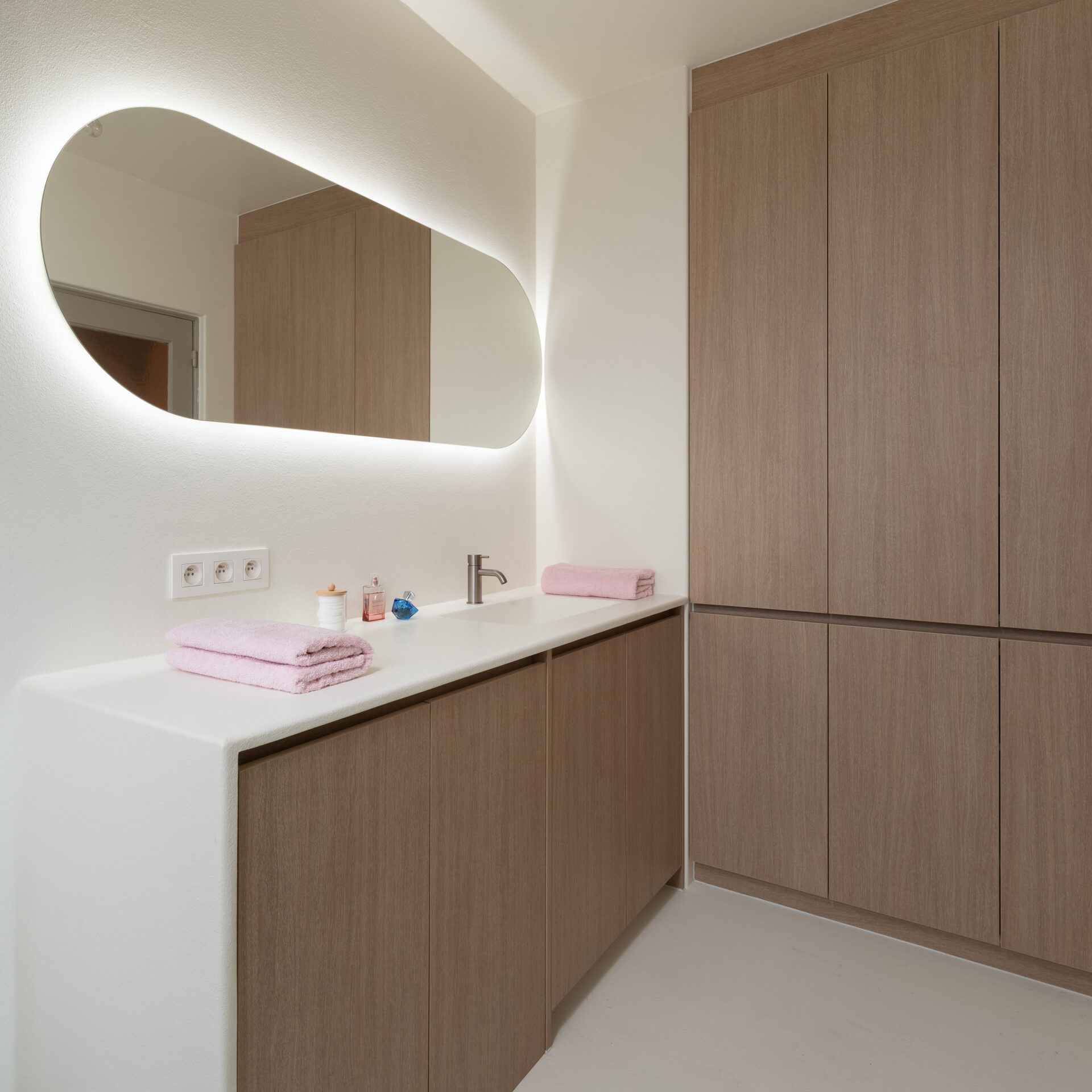
A seamless finish gives you design freedom that tiles cannot offer: continuous surfaces without grid lines, threshold-free transitions, and a calm, monolithic appearance.
At the same time, the classic weak link (the joint) disappears, structurally reducing the risk of moisture infiltration and mould. Form and technology reinforce each other.
What to look for when specifying
Four criteria determine whether a seamless finish performs durably in a wet room. For the background on the elasticity story: in our blog on why we choose Polynature, we explain why glass fibre reinforcement prevents cracking.
Shall we take a look at your bathroom together?
Still in doubt? During a no-obligation site visit, we can look together at what is feasible in your bathroom. You can reach us on +32 468 47 49 12 or via info@voeglozebadkamer.be
Substrate & adhesion
The finish is only as good as the substrate. Specify a stable, flat, and dry substrate, and align the build-up accordingly.
Waterproofing
Request a system that is 100% waterproof in itself and applied seamlessly, not one that depends on additional seal layers.
Elasticity
There is movement in every construction. A rigid finish will crack. An elastic finish follows the movement and remains intact.
Detailing
Shower corners, niches, threshold-free transitions, and connections are where things go wrong in practice, or exactly where a seamless system excels.
Technical specifications to include in your project documentation
Our finish is built around Polycoat.
Please note: do not include standard values or certificate numbers in your specifications without confirming them with us. We will be happy to provide you with the correct, up-to-date technical data sheets for your file.
Feature | Specification | Meaning for your design |
|---|---|---|
Base | Glass fibre reinforced polyester + resin | Elastic and crack-resistant, even with movement |
Waterproofing | 100% waterproof and completely seamless | No joints or seams as infiltration points |
Finish | Polycoat (sleek) or Polynature (mortex look) | Free choice of texture and appearance |
Colour | All RAL colours | Complete freedom in colour scheme |
Application | Wall, floor, shower, and bespoke furniture | One continuous material across all surfaces |
Repairability | Locally repairable | Limited intervention in case of any damage |
What really matters
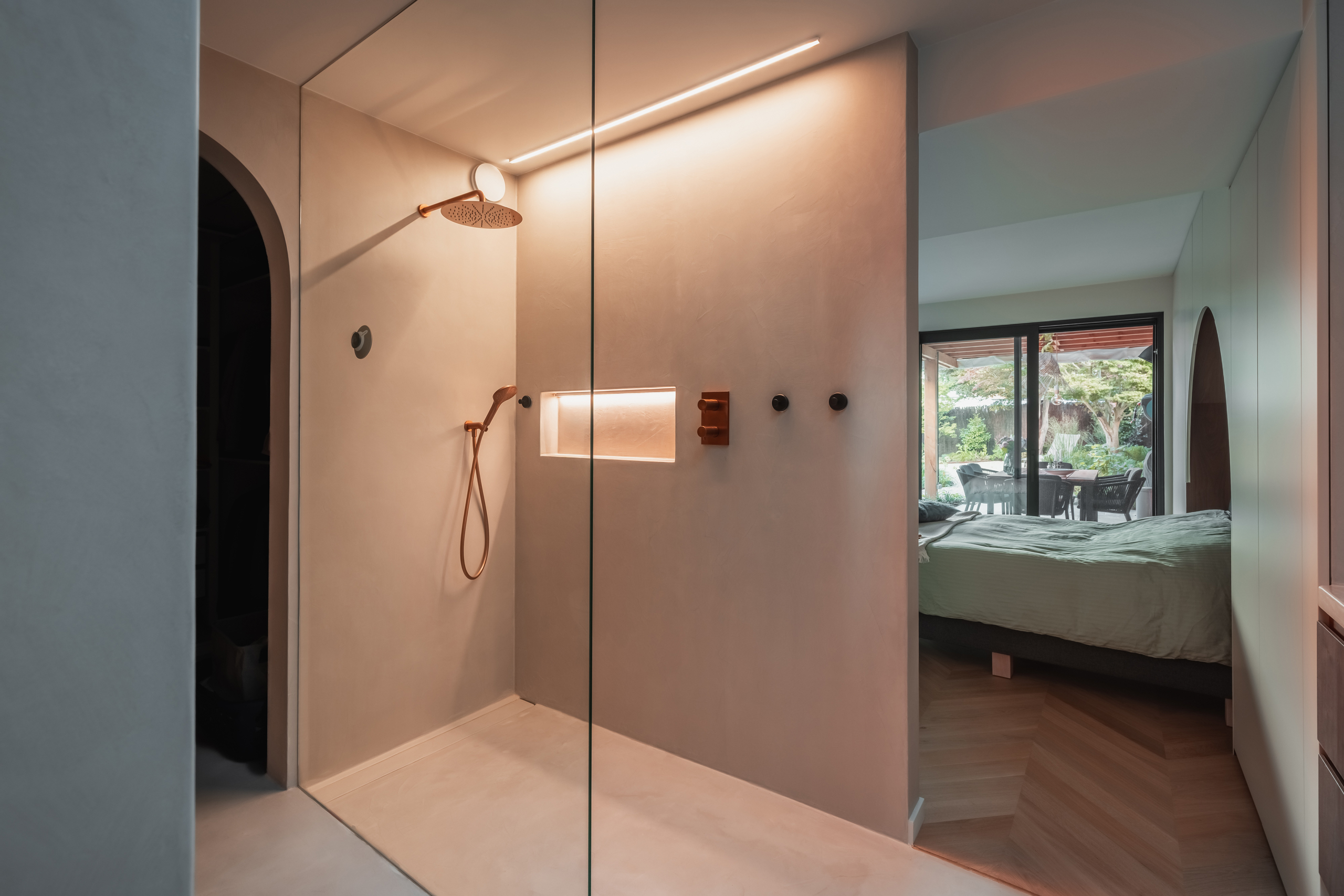
Because we execute everything seamlessly, we can realise details that are difficult or impossible with tiles: a threshold-free walk-in shower where the floor simply continues, recessed niches in the same finish, and continuous surfaces from wall to furniture. For example, view this project with bespoke furniture and a jointless shower.
1 partner from design to completion
For you as an architect, it is valuable to work with one partner who follows up the entire process: from advice during design, through material determination, to execution and completion. This ensures the detailing you draw is also the detailing that is installed.
Frequently asked questions
Which seamless wall finish can I specify for a wet room?
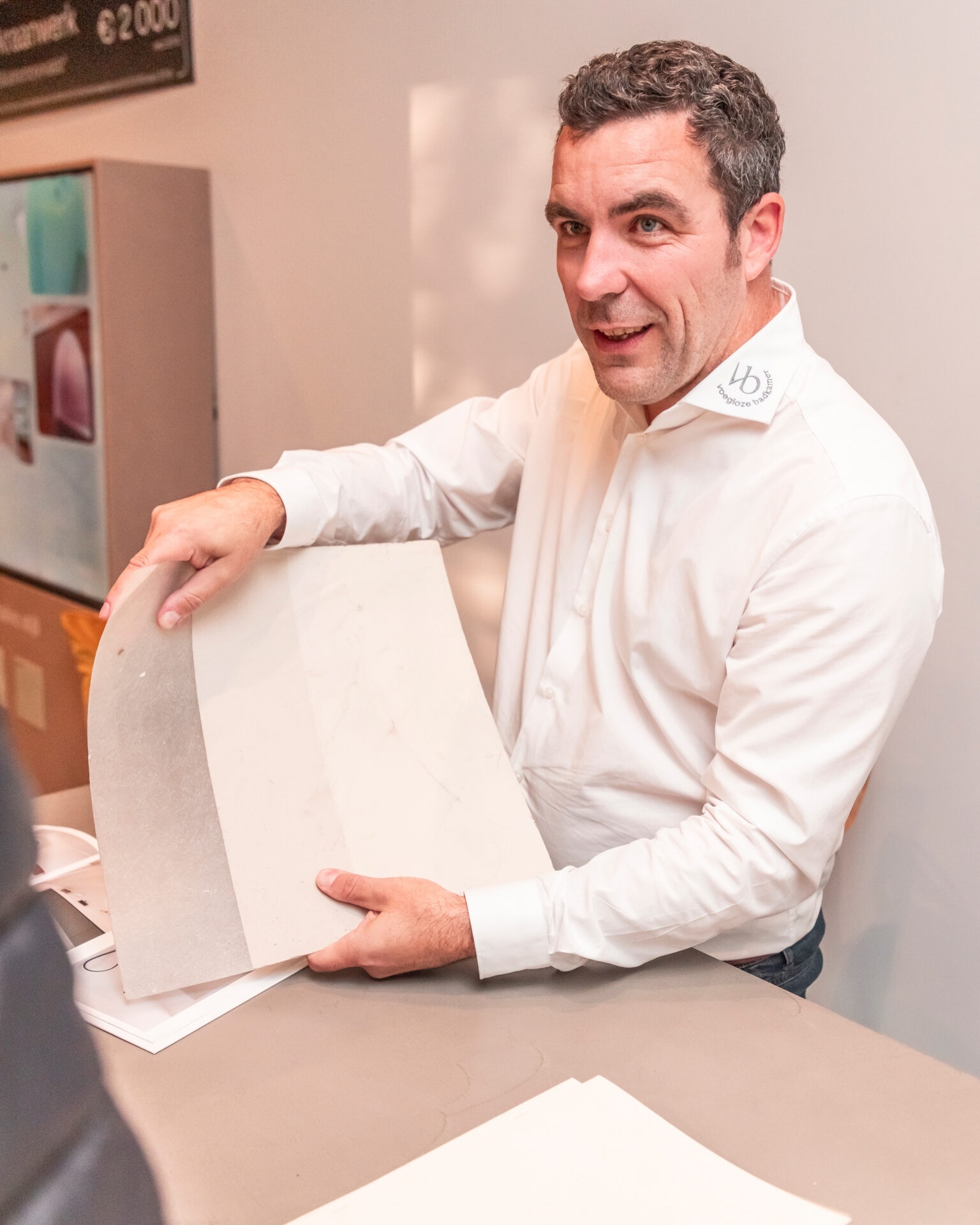
A system that is 100% waterproof in itself, applied seamlessly, and is elastic. Polycoat (glass fibre reinforced polyester with resin) meets these three criteria and can be applied to walls, floors, showers, and bespoke furniture.
What should I look for when specifying a waterproof bathroom finish?
On the stability and preparation of the substrate, on a system that is waterproof itself (not dependent on extra seal layers), on elasticity against cracking, and on the detailing of corners, niches, and threshold-free transitions.
Why does a seamless finish not crack while microcement does?
Our finish is glass fibre reinforced and therefore elastic: it follows slight movement in the construction. Rigid, cement-based systems such as microcement or mortex can crack with the same movement.
Do you also handle the full execution, not just the finish?
Yes. We work as a single partner following the process from design advice to execution and completion, so that the specified detailing is effectively installed as intended.
Let's connect
Whether you dream of a fresh update or a complete renovation: we would be happy to look together at what is possible in your bathroom. Tell us about your project, and we will think along with you.