
Seamless finishing in new builds & timber frame construction: why fibreglass makes the difference
In new builds, and especially in timber frame construction, there is always some movement in the structure: settlement, temperature and humidity fluctuations, and the “shifting” of wooden or lightweight load-bearing structures. For a bathroom finish, this is the greatest challenge because movement is exactly what causes a rigid finish to crack.
I am Dieter Provoost, Managing Director of Voegloze Badkamer. In this blog, I explain why a fibreglass-reinforced finish makes the difference specifically in new builds and timber frame construction: for you as a contractor, building partner, or developer, it is a matter of risk mitigation.

In this blog post
Settlement & movement
Every structure moves in the first few years. In solid construction, this is limited, but in new builds in general and timber frame construction (TFC) in particular, this movement is greater and more prolonged. Floor slabs, walls, and joints settle and shift.
A finish that cannot accommodate this movement transmits it in the form of hairline cracks. In a wet room, every crack is a potential leak.
Why rigid finishes crack
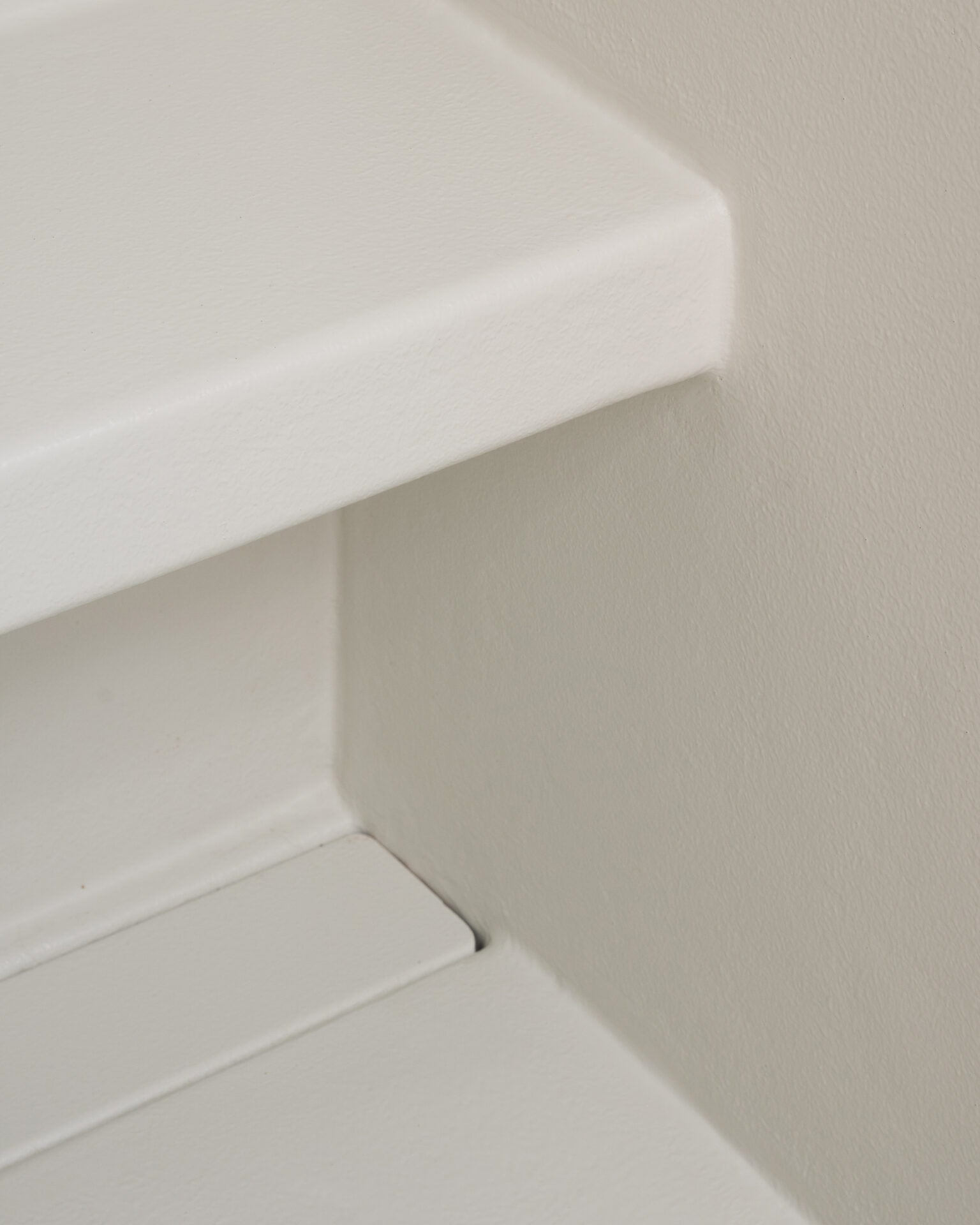
Cement-based finishes such as microcement, mortex and beton ciré are hard but rigid. They have hardly any elasticity. If the substrate moves, the finish can’t follow that tension and it cracks: often right at the most stressed points: corners, joints and transitions. That’s not an installation error, but a material property.
Shall we take a look at your bathroom together?
Still in doubt? During a no-obligation site visit, we can look together at what is feasible in your bathroom. You can reach us on +32 468 47 49 12 or via info@voeglozebadkamer.be
Elastic & crack-resistant
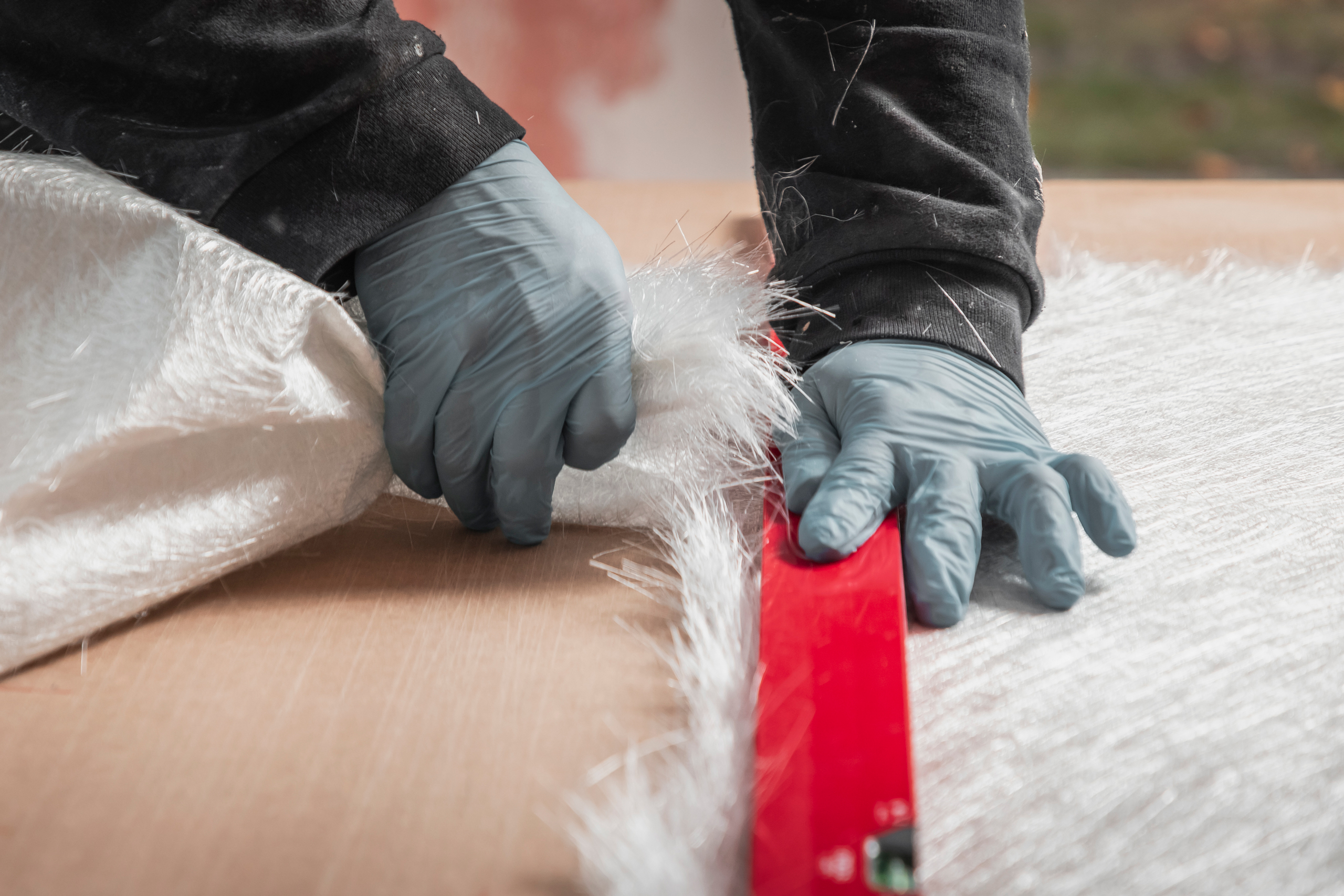
Our finish is built around Polycoat: fibreglass-reinforced polyester. The fibreglass makes the finish elastic and tensile. It follows the movement of the substrate instead of fighting against it. The result: it remains crack-free and therefore waterproof, even when the structure is still shifting.
Feature | Rigid finish (micro-cement / mortex) | Fibreglass-reinforced finish (Polycoat) |
|---|---|---|
Behaviour during movement | Can crack / hairline cracks | Elastic, follows the movement |
Long-term watertightness | Risk if cracking occurs | 100% waterproof |
Suitable for TFC / plasterboard | Increased risk | Yes, specifically designed for it |
Seams / joints | Seamless, but rigid | Seamless and elastic |
Waterproof on wood & rapid-build systems
Because the system itself is 100% waterproof and applied seamlessly, it forms a continuous waterproof shell over the wall and floor structure: also on lighter substrates such as MDF or other board materials in timber frame construction. We always tailor the build-up to the specific substrate; correct preparation remains the foundation.
Important: for technical performance and product specifications, we will provide you with the current technical data sheets. The requirements for the substrate are reviewed per project.
What this means for your planning & risk
For a contractor or developer, this technical advantage translates into something very concrete: less risk of after-sales complaints. No cracks mean no moisture problems, no repairs after completion, and a satisfied end customer. And because we, as a single partner, take care of the finish (and if desired, the joinery and custom furniture), there is one point of contact and one person responsible for the final result.
More technical questions about new builds and timber frame construction can be found in our FAQ or contact us via our page for professionals.
Frequently asked questions
Why do microcement and mortex sometimes crack in new builds or timber frame construction?
Because these cement-based finishes are rigid and have hardly any elasticity. In new builds and timber frame construction, the structure moves due to settlement and shifting. A rigid finish cannot follow that tension and can crack, especially at corners and joints.
Is a seamless finish suitable for timber frame construction?
Yes, specifically for that. Our finish is fibreglass-reinforced and therefore elastic: it follows the movement of the substrate instead of cracking, and thus remains crack-free and 100% waterproof.
Can the finish be applied to board material?
Yes. The system is itself waterproof and seamless, forming a continuous waterproof shell, even on lighter substrates. We tailor the build-up and preparation to the specific substrate.
What does this mean for the risk of after-sales complaints?
A crack-free, waterproof finish limits the risk of moisture problems and repairs after completion. As a single partner, we provide the finish with one point of contact for the final result.
Let's connect
Whether you dream of a fresh update or a complete renovation: we would be happy to look together at what is possible in your bathroom. Tell us about your project, and we will think along with you.