
Mortex or beton ciré in the bathroom? The disadvantages & the waterproof, crack-free alternative
“Dieter, I want that sleek concrete look in my bathroom but I read everywhere about cracks and stains. Is that true?”
I get that question almost every week. And I completely understand: the concrete look is beautiful, but the internet is full of stories about hairline cracks, limescale marks and a finish that loses its shine after a few years. Time to be honest about it as a professional.


I am Dieter Provoost, founder of Voegloze Badkamer. Today I manage the business, but I still occasionally work on-site myself, precisely to keep bringing that feeling and experience from the site into how we work. I have seen enough bathrooms by now, both ours and those of others, to know where things go wrong with a classic concrete look. So I am not writing this piece to knock anyone down, but to help you choose with your eyes open.
In this blog post
Why everyone suddenly wants a concrete look
The trend is logical. Anyone renovating today wants peace and space in the bathroom: no busy tile patterns and certainly no grid of grout lines that tires your eyes. A smooth, warm concrete look gives exactly that feeling of an oasis. In the bathroom trends for 2027 you see it appearing everywhere: natural tones, soft lines and fewer seams.
Mortex, beton ciré, microcement, tadelakt: these are all names for more or less the same idea: a thin, hand-trowelled cement-like layer with a mineral appearance. Beautiful, that’s beyond question. But the way such a layer is constructed determines how long it lasts. And that’s precisely where the catch lies.

The disadvantages of mortex & beton ciré
A classic microtopping is inherently stiff and thin. That makes it sensitive, especially in a room that heats up, cools down and becomes damp every day. The pain points I hear most often in practice:
- Hairline cracks: a cement-bound layer does not move with the substrate. If your screed or plasterboard deforms even a fraction, it shows as a crack: aesthetically and practically a weak spot for moisture.
- Waterproofing depends on the finish: beton ciré is not waterproof by itself. The protection lies in the varnish layer or impregnation on top. If this wears out, or is not applied perfectly, moisture can get through along with limescale.
- Prone to staining and maintenance-intensive: a mineral finish easily absorbs stains if the top layer is weakened by soap, shampoo, limescale, etc. Many systems therefore require periodic re-impregnation.
- Everything stands or falls with the installer: it is true craftsmanship. One layer too thin, the wrong primer or insufficient drying time and you only notice it months later.
In short: the look is right, but the technology underneath is more fragile than the photos on Pinterest suggest.
The same look, without the worries
And that is exactly why we developed Polynature ourselves. Not because we wanted a new product, but because we repeatedly saw the same problems on-site: cracks, questionable waterproofing and maintenance-sensitive finishes. We built Polynature step by step based on those pain points. The solution came first, the appearance afterwards. The beauty is the result, not the starting point. The reason I believe in fibreglass is simple: a bathroom moves. It heats up under the shower, cools down again and the substrate moves with it. A finish that does not move along will eventually lose that battle. A fibreglass-reinforced layer moves with it and therefore remains crack-free for years.
Then there is our approach: 1 partner, 100% custom-made. From the first site visit to the aftercare, everything goes through us. We determine the colour and texture together, we install it and remain approachable afterwards. This way, your bathroom becomes what it should be: a space that brings peace, not a project that causes you worry.
Comparison: mortex vs. a Voegloze Badkamer
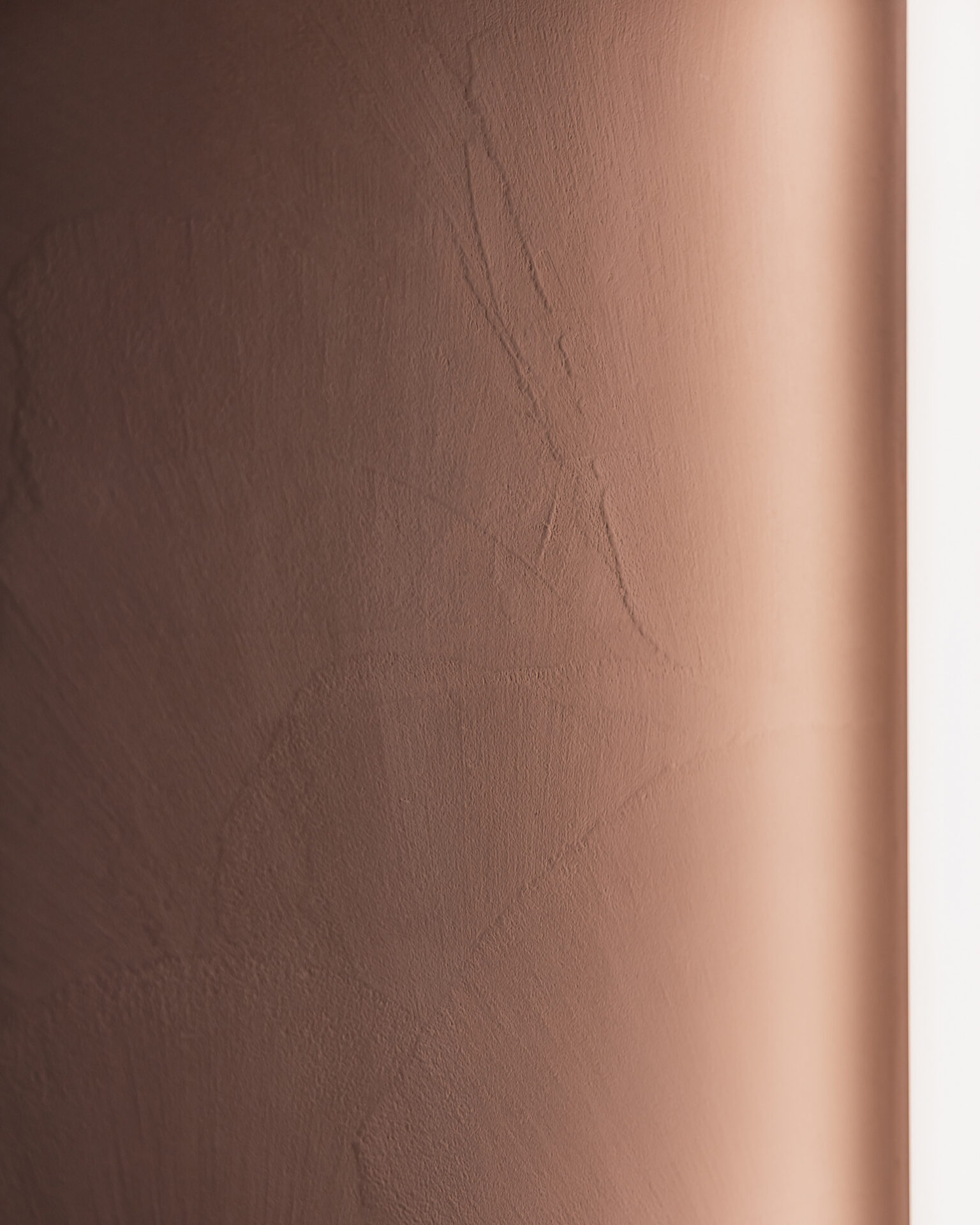
At Voegloze Badkamer, we start from a different foundation. Our Polynature finish gives you that same mortex, beton ciré or tadelakt look, but on top of a fibreglass-reinforced layer. That fibreglass makes all the difference: it’s elastic and effectively pulls the finish together, whereas a classic cement layer remains rigid and therefore cracks more easily.
What that means for you in practice: you get the look you fell in love with, but without the fine print. No annual stress about re-impregnation, no weak spot where water goes looking for a way out.
Want to find out (even) more about Polynature? Read our blog post “Why we at Voegloze Badkamer choose Polynature”
Feature | Classic concrete look (mortex / beton ciré) | Voegloze Badkamer (Polynature on Polycoat) |
|---|---|---|
Base | Thin cement-bound layer | Fibreglass-reinforced polyester + resin |
Waterproof | Dependent on the varnish/impregnation layer | 100% waterproof at the core: your finish is immediately your waterproofing |
Cracks | Rigid, sensitive to hairline cracks during movement | Elastic and crack-resistant, even with movement in the substrate |
Seams & joints | Seamless | Seamless: no joints where limescale or mould can settle |
Appearance | Concrete look / mortex / tadelakt | That same mineral look, hand-trowelled to size |
Maintenance | Often requires periodic re-impregnation | Low-maintenance and easy to clean |
Are you doubting between the concrete look and the seamless alternative? Feel free to request a no-obligation quote or drop by, so you can feel the difference for yourself.
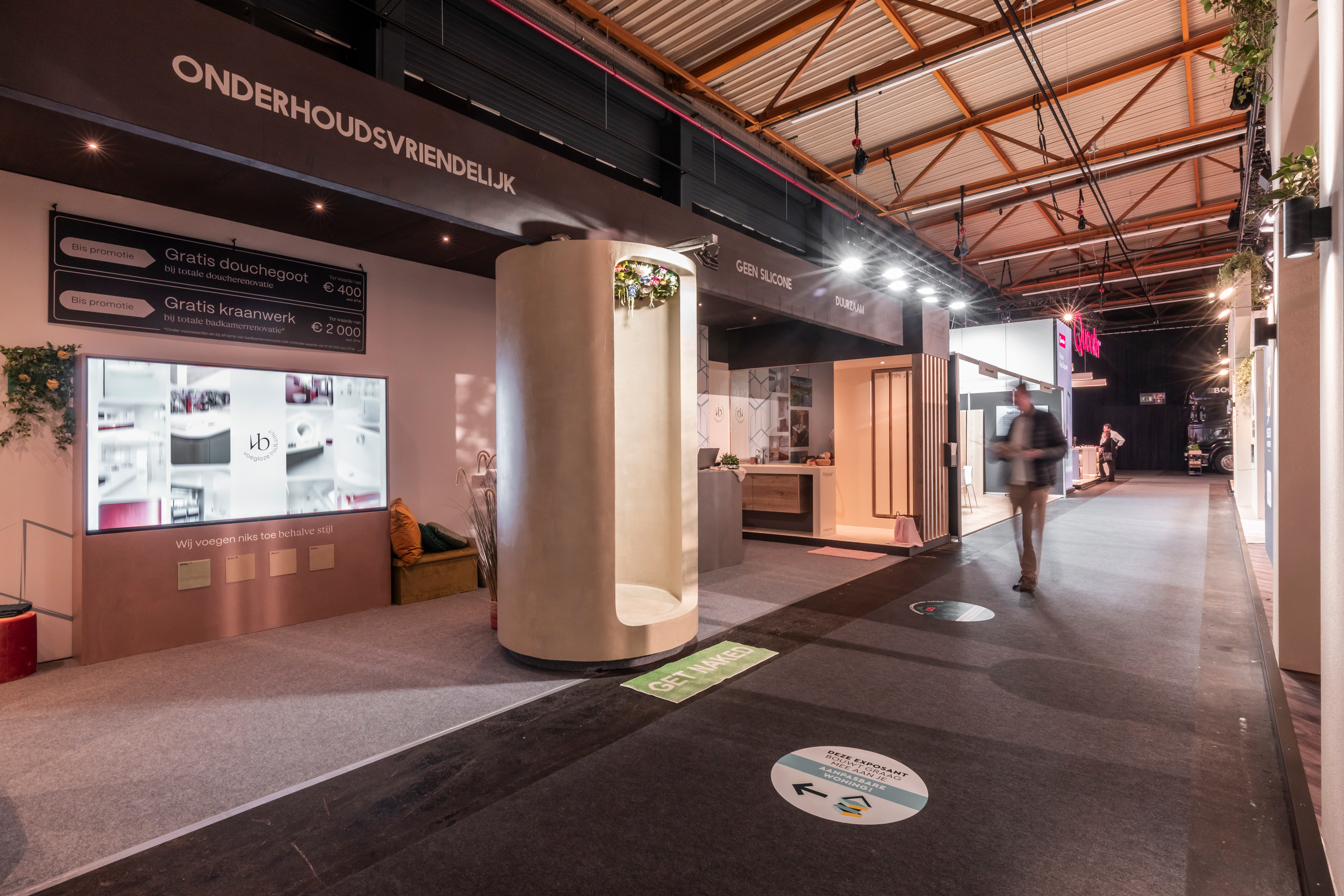
Come and feel it for yourself: our showroom & BILT Ghent
You don’t judge a concrete look on a screen. You have to feel it. That is why we are currently completely renovating our showroom in Ledegem, entirely in the seamless style. We want you to be able to run your hand over a real wall, see the colours in daylight and immediately understand the difference from a classic finish. Innovating and staying up-to-date is simply in our DNA.
Can’t wait? Then I look forward to seeing you at BILT Ghent (formerly the BIS fair), the premier (re)building fair in Flanders, from 10 to 18 October 2026 at Flanders Expo Ghent. Drop by, ask your questions and discover why we believe seamless is becoming the new standard.
Frequently asked questions
Is a mortex or beton ciré bathroom 100% waterproof?
Not automatically. With a classic concrete look, the waterproofing lies in the varnish or impregnation layer on top of the cement. If this wears out or is applied carelessly, moisture can get through. With a Voegloze Badkamer with Polycoat, the finish itself is waterproof: the look and the waterproofing are one and the same.
Do you get cracks in a concrete look bathroom?
With a rigid, cement-bound layer, this is a real risk as soon as the substrate moves. A fibreglass-reinforced finish is elastic and moves with it, keeping it crack-resistant, even with slight movement of the screed or wall.
What is the difference between Polynature and mortex?
The appearance is very similar: both give that warm, mineral concrete look. The difference lies in the construction. Polynature is hand-trowelled onto a fibreglass-reinforced Polycoat base, while mortex is a thin cement layer. This makes Polynature waterproof at its core and much less prone to cracking.
How much maintenance does a Voegloze Badkamer require?
Very little. Because there are no joints, there is also no grid where limescale and mould can settle. You simply wipe a seamless surface clean. That saves you time and frustration every week.
Let's connect
Whether you are dreaming of a fresh update or a complete renovation: we would be happy to look at the possibilities for your bathroom together. Tell us about your project, and we will think along with you.